
In transformation programs across mining, oil & gas, and heavy equipment industries, one story repeats: the system goes live, but adoption stalls. Dashboards sit unused. Mobile apps are bypassed. Workarounds return. Leaders blame “resistance to change.” But the truth is deeper—and far more fixable.
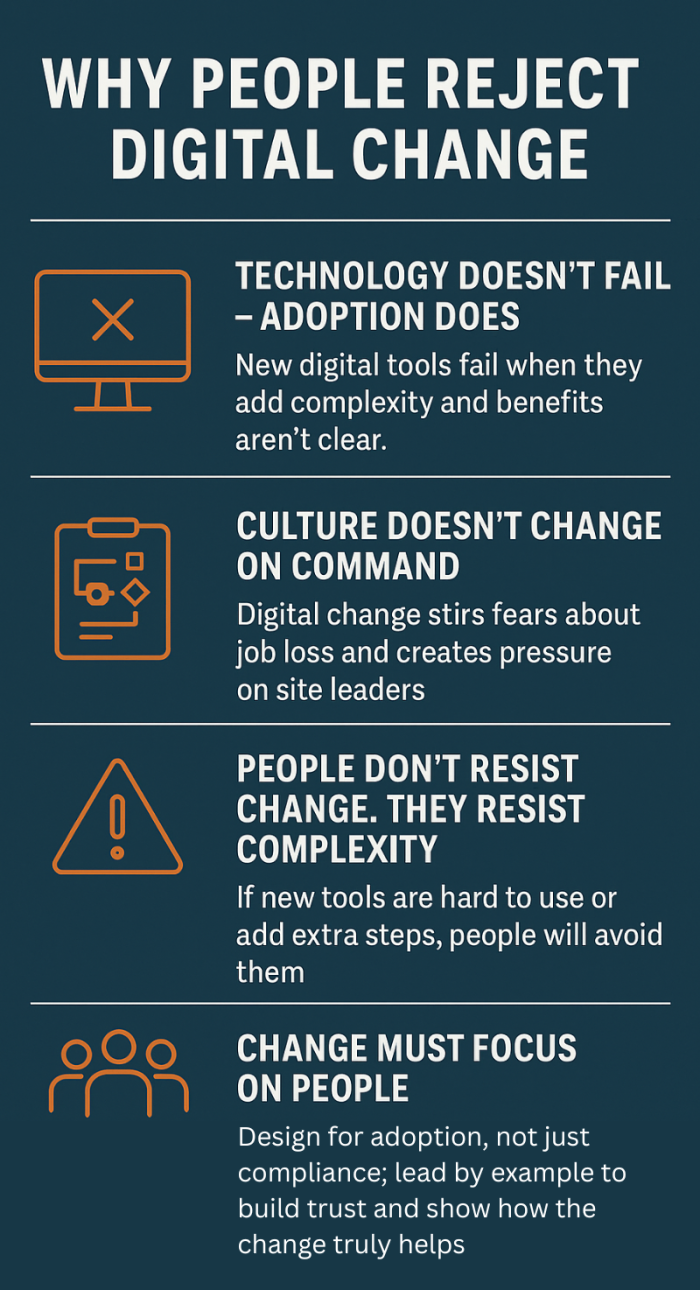
Technology Doesn’t Fail—Adoption Does
New ERP platforms, BI tools, or mobile applications don’t fail because they lack functionality. They fail because they don’t meet people where they work. When digital change is designed from the top but deployed to the front line without empathy, friction multiplies:
- Processes feel more complex, not simpler
- Benefits aren’t clearly communicated
- Workflows ignore site realities
The result? Teams revert to what they know—not out of defiance, but because the change feels like risk, not relief.
Culture Doesn’t Change on Command
You can’t “roll out” a new culture with software. And yet, many transformation projects underestimate the emotional side of change:
- Field teams fear being replaced or sidelined
- Middle managers feel excluded from design
- Site leaders are caught between executive pressure and workforce pushback
Without a deliberate, people-first change management strategy, even the best tools become sources of stress—not success.
People Don’t Resist Change. They Resist Complexity.
When new tools are unintuitive or create extra work, resistance is logical. If a planner has to log into three systems instead of one, they’re not resisting change—they’re resisting inefficiency. If a supervisor can’t trust the equipment data they’re seeing, they won’t use the dashboard. Digital adoption begins with design that removes friction.
Customer Job (from Value Proposition Canvas)
“Maintain mining equipment effectively; streamline procurement and inventory”
Related Pains
- Unclear benefits lead to fear and resistance
- Manual workarounds persist due to system complexity
- Lack of frontline input causes misalignment between tools and tasks
Change Management Isn’t a Department—It’s a Design Principle
Many companies treat change management as an afterthought—something to layer on post-deployment. But effective transformation integrates change from day one:
- Involve site champions in early design
- Map tools directly to day-to-day jobs
- Pilot in high-trust environments with clear feedback loops
Change becomes credible when people see that it’s grounded in their reality—not just executive intent.
Leadership Must Show—Not Just Tell
Transformation succeeds when leaders lead by example. When field staff see their managers referencing dashboards, using data to guide decisions, and modeling the new language of work, trust builds. Change doesn’t feel imposed—it feels owned.
Too often, executives focus on funding and timelines, while neglecting the single most powerful accelerant of change: belief. Belief that the system works. That it helps. That it’s here to empower—not replace. Digital transformation management should build that belief at every level.
Conclusion: Change Is Human First
Technology enables transformation. But people sustain it. If you want adoption, design for capability, not just compliance. Show how the new system helps them win—faster, easier, smarter. Make the benefit visible. Make the training contextual. And most importantly—make change personal.
Because at the end of the day, digital transformation isn’t a tech project. It’s a leadership challenge.
